Loading...

Saturday, July 11, 2009

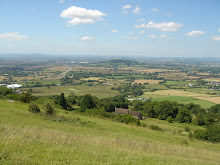
Under a threatening sky ...

Posted by Picasa
Saturday 4 July 2009: the weather threatened rain at some stages during the picnic but fortunately limited itself to a short drizzle that did not trouble us much. This picture suggests we may just have got away with it compared to other parts of the Vale.

Ah, the beds and mattresses ...

Posted by Picasa
My thanks to Dr Griffiths for this heart-warming shot of some beds and mattresses, probably, from the absence of partitions, in the laundry opposite the mess hall. This was used as overspill accommodation when the dormitories and the tents were full. Taken, Griff thinks in 1984 or thereabouts. It brings back that luxurious feel, doesn't it?

An artist at work ...

Posted by Picasa
It was good to see Becky Sanderson (formerly Spencer) and her husband Richard at the reunion and Becky has found her Crickley albums. Here during the 1976 season Andrew Powell adds a detail to one of the many dozens of plans that he drew over the years.

Friday, July 10, 2009

During the 2009 site tour after the picnic

During the picnic PWD took us on a site tour. This Dumycz shot captures just over 40 of the 60-plus who attended, grouped on the National Trust side of the hill. Apologies if I miss anyone in the following list: Jane Dineen, Ros Cleal, Marion Barter, Paul Noakes, Philip Dixon, Terry Courtney, Andrew Powell, Anna Behan, Chris Phillpotts, Nick Snashall, Bernie Dawson, Corky Gregory, Les Capon, Malcolm White, Alan Ford, Richard Ozanne, Rebecca Chambers, Jill Hummerstone, Emma Turner, Dave Foster, Penny Hart, Steve and Joanne Vaughan, John Parry, Julie-Ann Morrison, Penny Hart, Kate Dumycz, Lydia Savage, John Boden, Iain Ferris, Richard and Becky Sanderson, Lucy Loveridge, Dave Butler, Miriam Vallely and Mike Sims. Phew - who did I miss? PWD finished the site tour with a call "Back to drinking!"

The morning after the picnic before ...

Posted by Picasa
View of Crickley from Birdlip, taken on the morning of Sunday 5 July 2009, when Lucy Loveridge, Corky Gregory, Paul Noakes and I went for a leisurely post breakfast stroll. All very peaceful.

Crickley Hill in 'The Times'

My thanks to Kate Dumycz for sending me this piece from 'The Times':

'Evidence of cult activity on site - Archaeology

Times, The (London, England)-August 17, 1989
Author: Norman Hammond, Archaeology Correspondent

A ritual landscape four thousand years old is gradually emerging from the Cotswold site of Crickley Hill. Noted as a fortified settlement both in the Neolithic and the Iron Age, the site has now yielded evidence of ceremonial and cult activities in the intervening period.

Crickley Hill, which lies south east of Cheltenham on a dramatic spur overlooking the Severn Valley, has already yielded evidence of ritual constructions in the later Neolithic around 2500 BC (The Times, July 29 1985). These included a small wooden enclosure which Dr Philip Dixon, who
has directed the excavations for the past 21 years, interprets as a nemeton, or shrine.

The current discoveries have been made in the same part of the site: the nemeton was overlain by a stone circle at the end of a "long mound", and it is this mound that has produced some of the present season's intriguing results.

"The Long Mound itself consists of a mass of finely sifted topsoil, three metres (10 feet) wide, nearly 100 metres long and originally about a metre high. There was a stone kerb along both sides, under some of the slabs of which butchered animal bones were laid," Dr Dixon said.

"This was merely the final stage: there were at least five phases of construction, and the whole mound was built over the neolithic trackway that led to the shrine."

Dr Dixon said that while there were as yet no absolute dates for the Long Mound complex, the feature was clearly substantially later than the Neolithic features, which were covered by a mature soil, and earlier than the first Iron Age occupation of around 600 BC, postholes from which were cut into the silts over the Long Mound phase.

A date in the mid second millennium BC, contemporary with the Wessex Bronze Age and the final constructions at Stonehenge, would be appropriate, Dr Dixon believes.

Another surprising discovery has been the setting within which the Long Mound was built and used: on the slope overlooking it, lines of pits were dug into the limestone bedrock, many with fragments of cremated human skulls or animal remains at the bottom.

Linking the pits were a series of cobbled platforms, scorched on their upper surfaces. So far at least three, and perhaps four, roughly parallel lines of pits have been excavated, oriented towards the circle at the western end of the Long Mound.

"Surrounding the whole of this part of the site we have uncovered a narrow trench, which seems to have been used solely for brushwood fires", Dr Dixon said.

"The Long Mound and its stone circle are invisible to anyone standing outside this trench, except for one place, and there we have found postholes suggesting that a fence or screen was erected.

"The combination of prominence and secrecy suggests Chieftain's magic: the nearest point from which the mound can be seen, a quarter of a mile across the valley, is Barrow Wake, the location of Bronze Age round barrows or burial mounds."

The central portion of the Long Mound remains unexcavated, but Dr Dixon hopes that the full sequence of construction and ritual activities will be elucidated in a future season of excavation.

Section: Home news
Record Number: 1012744375
(c) Times Newspapers Limited 1989, 2003'

Thursday, July 9, 2009

The Friendship Quilt

Posted by Picasa
One of the many delightful moments during the reunion: the display of the friendship quilt made by Kate Gilbert, Corky Gregory, Naomi Jackson, Sue Lee-Jeffs and Lucy Loveridge in 1981 and given to Ros Cleal at the time of her wedding to Dave Southwood. Admiring the quilt, left and right, Maya and Alexandra Domeshek, Kate and Eric's daughters; holding the quilt, left to right, Ros, Lucy, Corky and Kate.

I drove Kate, Eric, Maya and Alexandra down from London on Friday and Kate talked about the quilt as we drove: little did we know, as she mentioned it and explained how it came to be made, that she would be reunited with her handiwork the following day!

Crickley Hill & Ullenwood Camp map

Posted by Picasa
A section from a 1970s Ramblers' map of the Birdlip area showing Crickley Hill, Ullenwood, Birdlip etc. The detail at Ullenwood looks not quite familiar, if you click on the image and enlarge it, as the building layouts definitely are different on this from when the diggers were all in residence.

Experimental archaeology 9: rampart destruction 1970


Posted by Picasa
Two splendid pictures from 1970 from Lydia Savage: Baz Roscoe, assisted by Dave Fine, created a rampart section and set fire to it to see if the meringue effect could be reproduced, during the 1970 season. It proved harder to fire than you might think. In the lower photo, Phil and Sonia and Christopher Hawkes who were visiting the site.

Wednesday, July 8, 2009

Plan of the progress of the excavations

Posted by Picasa
Click on image to enlarge
And, with thanks again to PWD for the permission to reproduce, for those of us who can't quite remember which part of the hill we were digging in which season, here is Phil's plan of the progress, season by season across the site. Lydia Savage says: "Actually it's a scale drawing of my first attempt at Banoffee Pie ..."

Now which cutting was that?

Posted by Picasa
Click on image to enlarge
I am delighted to report that Phil shifted at least 5 copies of his magnificent 1994 oeuvre 'Crickley Hill - the Hillfort Defences' during the course of the reunion. I am also grateful for his permission to publish abstracts from same. Julie-Ann Morrison remarked that the grid of the cuttings would be very helpful for those of us who don't carry it round in our heads! So here it is. Or is it, according to Lydia, her lemon meringue pie ...

Tuesday, July 7, 2009

Dr Ferris is mischievous ...

Posted by Picasa
Here's 'that nice Mr Ferris' (as Julie-Ann Morrison would say) looking as though butter would not melt in his mouth. But he sends me the following mischievous e-mail:

"I wonder if it occurred to you, seeing the displayed friendship quilt on Saturday, that there might be a very fitting way to celebrate and recognise the fantastic romantic exploits of the Crickley diggers over the years by incorporating the information on Dr Phillpotts's flowchart into a textile design, something like Tracey Emin's tent, although you might feel that something the size of a circus big top is more appropriate in this case. Let me know what you think."

Lucy Loveridge, Kate Gilbert, Corky Gregory and Naomi Jackson would certainly have some sewing to do, but it's probably just as well Dr Ferris isn't within clouting distance. Do I correctly divine the views of the expert sewing team?

Perhaps Attic red-figure pottery, c. 520 - 460BC, would be a more appropriate medium? Who were the painters amongst us?

Would you buy a rusty clout-iron from these men?

Posted by Picasa
Messrs Noakes and Parry, at their most alluring, halfway though the picnic on Saturday 4th July 2009; behind them, in the background, Nick Snashall, Corky Gregory and Jane Dineen. Not a catbasher or a clout-iron in sight ...

Monday, July 6, 2009

Simple beauty

Posted by Picasa
Dr Ferris and I walked through the beautiful cool beechwood together on Saturday morning after breakfast. We nearly lost hope that we would find a break in the trees to see the view that we knew must be there: a happy chance encounter with a kind woman walking her dog, just as we were about to give up, meant that we could ask the way: "Through this gate and down to the end of the field, there's quite a good view", said she.

And this is what we saw...

1975: Clive Anderson's cutting

Posted by Picasa
The Boden archive produces this 1975 view of Clive Anderson's cutting, with L to R, ?, Martine (who was Belgian), Dave Southwood, two lads from Gloucester whose names escape JB, and Clive himself. Flight Lieutenant Southwood, as he then was, is sporting a plastic Roman soldier's helmet. As you do.

Sunday, July 5, 2009

The first of many ...

Posted by Picasa
Well, we all made it just ... it was simply wonderful to see everyone. C-H-M is too happily tired to blog much today but I thought I'd start with this shot from Friday evening, 3 July 2009, at the Royal George at Birdlip where we were, I think 28 at dinner. Drinks before dinner, L to R, Paul Noakes, Iain Ferris, Phil Dixon, Bernie Dawson, David Griffiths and Rebecca Chambers.

Cutting AXV, 1979: that ditch

Posted by Picasa
This 1979 compilation of Phillpotts photographs has a slightly "morning after the night before" feel to it doubtless caused by the out of focus photography. Many of the usual suspects here and there including Pete, John Parry, Mike Taylor, Dick Potts, Zoya Spivakowska, Mark Spivakowski, Training, Rachel, Dmitri, Elsa Charlot, Julian Parker and Mandy Hatherly.

Saturday, July 4, 2009

Savage 1988: 11 Epilogue


Posted by Picasa

Today, the morning of the reunion, it seemed appropriate to mark the occasion with the epilogue from Richard Savage's 1988 booklet. Thanks go to him and the Crickley Hill Trust for permission to reproduce this final abstract:

11 Epilogue

The first season of excavation at Crickley took place in 1969. In the eighteen annual seasons since more than 3000 unpaid volunteers from all over the world have worked on the site, excavating over half of the hill-fort interior. The work is organised as a research and training excavation by Dr P. W. Dixon, of the University of Nottingham.

An archaeological excavation aims to derive an account of past human activity is aside from the traces it is left behind. The methods of excavation must be responsive to the minutest details - at Crickley, for example, of the wear and discolouration of stone, or of differences in soil texture - and the smallest objects, such as fragments of flint, bone, charcoal or fired clay, must be recovered. All the work at Crickley is done by hand, mostly using brushes and small trowels, with which nearly five acres have been excavated in the first eighteen seasons. Over a million finds have been made.

The essence of excavation is its precise recording in drawing, measurement, photograph and verbal description. At Crickley every stone in every layer has to be accurately planned, and, as at other sites, the recording system for finds includes among other information precise co-ordinates and exhaustive tabulation of their context. Samples of soil are taken from which environmental remains are extracted including seeds, snail shells and other organic debris. Later processing of the records, fines and samples - "post-excavation" work - is as important as the excavation itself; indeed, without it the excavation would have no meaning; and it is at least as difficult. The last stage of the work is before publication of the data and their interpretation, making the result of the work on the site permanently available to the specialist and laymen alike.

[Photo: excavation of the final Iron Age wall]

Since 1976 the project has been managed by the Crickley Hill Archaeological Trust, an educational charity whose work on the hill is supported entirely by voluntary contributions. The Trust's responsibilities include post-excavation work - much of which has been done by successive teams working on the Manpower Services Commission's Community Programme, whose support the Trust gratefully acknowledges - and publication. This will be done in a number of volumes, of which the first, on the Iron Age defences, is ready for press at the time of writing. The Trust also provides an educational service which, with help from Westbury Homes, Ltd., Warners Fairfax Travel and the Manpower Services Commission, runs a mobile exhibition illustrating the archaeology of the hill. This is housed in a coach and can be booked the visits to schools, colleges, other institutions, associations, and public events. Representatives of the Trust regularly give lectures on its work.

In August 1974 the owner of the greater part of the site, Tom Morris, Esq., D.L.C., most generously presented it to Gloucestershire County Council. Crickley Hill has since become a Country Park managed jointly by the County Council and the National Trust, which owns the remainder of it.

If research sheds a brilliant light on one site which was long in use, like a lamp in a dark street it makes the surrounding shadows seem more obscure. Figures show briefly in the light, then leave; others taking their place are in their turn chased away, and so the story goes on, at Crickley through 25 or 30 episodes. Often the ring of light lies empty, for these are incidents in busy lives, mostly lived beyond the limit of our vision, in the neighbouring uplands and the Vale below.

[Photo: Crickley Hill from the west]"

Friday, July 3, 2009

The quarry road, Easter 2009

Posted by Picasa
Looking north east down to the quarry road from the northern end of the Iron Age Rampart which runs up to the right of this photo, taken earlier this year. Did Richard Savage really once mash the suspension of the famous VW bus by driving 23 people up here?

Ullenwood, peaceful in the morning sunshine

Posted by Picasa
From the angle of the shadows, this must have been taken early one morning, before too many people had crawled out of their pits: a further matutinal clue lies in the full milk crates on the step outside the kitchen entrance. This shot comes from the album of Mr Crickley 1983, better known to the public as Dr David Griffiths. Hope you can make it tomorrow, Griff.

1979: the strain starts to show

Posted by Picasa
Another collage from Dr Phillpotts's 1979 photographs: F3351 was clearly beginning to take its toll as you can tell from the look on my face as I come back down towards it with a wheelbarrow. Dr Cleal looks as though she's just been knocked out. On the right-hand side of the collage Matthew Wilkinson looks a bit cheerier, whilst at the bottom Randall Motkin chases a frisbee. At the top in the middle Marian Barter scratches her head with Matthew Garner and Dave nearby. At the bottom in the middle many people slave away in the bottom of the Iron Age ditch on cutting AXV, including Mike Taylor, Training, Gill, Pete, Zoya Spivakowska, Elsa Charlot, Mandy Hatherly and me.

Thursday, July 2, 2009

The Chronicler ties up some loose ends ...

Dr Phillpotts stirs again in his garret and shares the following wisdom:

"The Giant JP originated I believe in the mysterious CH78, with a character called Bill who only dug with us that year. I don't remember much about Bill, except his wet weather gear, which comprised a bin liner tunic, a bin liner skirt, and a sample bag wrapped over his head and clamped into his beard with a large bulldog clip, making him look like a punk battleaxe granny. He did bring us the Giant Parrot joke (What noise does a giant parrot make - SQUAWK!!!). He liked to gather a group of 6 or 8 people and tell this at high volume in the porch of the Air Balloon, in order to provoke the locals. This then developed into the Giant JP, which had a variable text decided by committee.

I was present when the great man, on rising one day, uttered the immortal words: "Sod this for a lark; I've just found a piece of limestone under me foreskin".
[I remember this bit. Ed] Not only was this incorporated into the Giant JP, but the piece of limestone afterwards became the trophy in the Personality of the Year contest. [I don't believe you - Ed.]

I was present for quite a lot of CH78, but had no camera. I only acquired my first puny point-and-poke in 1979, and it took very narrow film, hence the soft focus effect of my early shots. I only really learned to take proper photos in about 1984, way behind the Pentax-Brandisher [Mr Boden. Ed]. The person who never returned JB's slides was Sandra the Cook.

An American lady asked about CH78 (might she be Naomi Jackson?) [No, it was Amy Cay. Ed]. From my notes towards a social history of Crickley Hill I can report the following highlights:

JP and I prepared the kitchen at the start of the season by scraping it down with table knives and repainting ('You make very nice!' said Lofty's mother, looking through the window). Ken and Dave were the cooks.

There was a contingent of Phil's students from Nottingham Uni, and an even bigger group from Leicester Uni. There were also some Poles, who were contacts of John Howell. Wonderful section drawings resulted, but labelled in Polish and Russian.

We removed vast quantities of backfill, and took huge soil samples. Baling out the cuttings.
We made a raid on Cheltenham Ladies College summer fête (Penny may remember that one, as she was running a stall).
[I'm sure it is engraved on her heart. Janet Douglas will have imperishable memories of it too. Ed.]

Visits to the Golden Heart.

Late night visit from Fachtna McEvoy and P J Pikes, with their customary crate of booze.

Several of us dressed in drag for one of the dinner times, though I recall that Arwel looked more like a French curé in a long dress and straw hat.

Coach trip to Gloucester, Kingscote and Uleybury, with Lofty at the wheel.

John Howell gave a lecture about something.

An excellent dinner at Major Birchall's house.

Attempts to cram lots of people into small spaces (phone box, Mike the Whale's tent etc).

[A passage has been redacted here on the advice of C-H-M's lawyers - it was salacious, if not scurrilous and has no proper place on a family blog of this type. The usual fiver buys the details. Ed.]

Randal Motkin's first visit, I believe. I have missed out some of the lowlights, as it was in some respects a quarrelsome year. You may wish to edit some of the above. [Alas, I had to. Ed]

On Boden's shop steward speeches, I remember one from CH82, when he was exposed to some light drizzle whilst planning (I believe I have it verbatim): 'I don't think we should work in the rain. People don't work properly in the rain, they just piss about. (pause) I take myself as the prime example'.

I think we need Richard Savage to confess to the Great Bap Mountain and the Furry Turkey."

[This last paragraph, I think needs some illumination from the Chronicler: I will interview him on Saturday, if I remember. Ed.]

Noakes and regalia

Posted by Picasa
Captured by top society snapper John Boden, Noakesy in a 1975 photo, exercising his quadricipes, poised in mid-air, not too close, we trust, to the barbed wire fence, clasping his sceptre and part of an orb. A prize tomorrow or Saturday for anyone (other than JB and Dr Ferris) who can correctly explain how Paul came by his regalia. I'm sorry to have to disqualify Dr Ferris but he has seen the accompanying Boden photos which explain all ...

View of Crickley Hill from the Royal George

Posted by Picasa
Somewhere beyond all the trees in the foreground in this postcard is a certain well-known hill. Probably not the best of my eBay postcard collection, which I suspect may now have run its course: there can't be that many more old postcards of Crickley that I haven't already acquired and posted on the blog, but you never know.

Wednesday, July 1, 2009

Er ... yes ...

Posted by Picasa
What can one say? From Corky Gregory's album: was this a headgear competition? Big Les in his "Friends of The Guinness" T-shirt, Paul Noakes sporting an "Archaeologists Do It More Crickley" sweatshirt and in the middle, John Gale, who as Corky says hasn't got a special shirt but makes up for it with the hat. I'm guessing that this is c 1982.

Kamchatka 1983

Posted by Picasa
This picture from the 1983 Phillpotts album bears the legend " Steve's cutting: Kamchatka. Hut wall, Sue White and Malcolm Biles." I assume the cutting must have been a little way away from the comforts of the finds hut and the Leisuredrome to merit its name.

Tuesday, June 30, 2009

Up to no good, I'll be bound ...

Posted by Picasa
It was, I think John Boden who used to say to me "What are you up to, Jules? Up to no good, I'll be bound ..." which leads me neatly to this, from the Chronicler's 1985 series, debauch in a caravan. Left to right, ?, Bob Hopegood, Nick Snashall, Ros Cleal, Julian Thomas, an outsize teddy bear and Julie Lancley. It looks remarkably cosy. Was this the famed 'Naughty Nicky's' - I cannot tell, I was not there: I await enlightenment ...

OK, what are they up to?

Posted by Picasa
Jane Dineen sends this odd 1982 offering. As she says, it looks as though the team are trying to find out how many buckets of rocks it takes to fill a site hut. On display Steve Vaughan, Arwel Barrett and John Parry, amongst others.

Does the clue lie in the padlock and the roof being folded back on itself? I think whoever had the padlock keys must have gone AWOL so the troops, ever keen to dig, took the roof off the toolshed and got their kit out through the resulting aperture. The fact that people are wearing pullovers and jackets indicates it's probably early in the day which is another circumstantial detail in favour of my theory. Anyone remember this episode?

Last view of the bunker

Posted by Picasa
Readers will probably be relieved to learn that this is the last of the Cold War project series photographs of the Ullenwood bunker: I have now posted all of Michael Hesketh Roberts's pictures in all their glory, both in colour and in black-and-white. Thank you to the English Heritage National Monuments Record for the permission to reproduce the photographs.

Monday, June 29, 2009

Section through the 1982 rampart cutting AXVII

Posted by Picasa
These two photos from Jane Dineen, when spliced together, give a superb view of the 1982 rampart cutting AXVII, viewed from cutting FA3(?ish). For a full account see pp144 to 149 of 'Crickley Hill, The Hillfort Defences' (Dixon 1994). P144 has two photographs which show the left and right hand parts of this photo. The left side, to quote PWD, is "the front face of the Period 2 rampart, built quite roughly on a deep turf and chipple bed, and left untouched and partially ruined during the later rebuilding of the defences during Period 3a and 3b". The right side is "the front face of the Period 3b rampart, after removing the tumble and soil, showing the corner of the rebuilt defences, with a short gang length. A gang break is visible ... the collapse of the end of the bank has led to the spreading of the second gang-length southwards."

I think I can see Iain Ferris, Mike Taylor, Terry Courtney, Jim Irvine, Steve Vaughan, Big Les and Bernie Dawson but do my eyes deceive me?

Why were all the desks outside?

Posted by Picasa
And here is an altogether mystifying tableau from Dr Phillpotts's album for 1983. The troops all seemed quite cheerful, left to right, ?, ?, Jane Fitt, Julie Fissenden, Ros Cleal, Dave Southwood and Nick Snashall. I'm inclined to think that this photograph was taken on a Thursday morning, based on the fact that nobody is wearing their digging clothes and considering the angle of the shadows. But I cannot account for the multitude of desks sitting outside behind them. Can anyone remember? I assume that the little bags attached to the line with clothes pegs contain Frank Green's soil samples.

Sunday, June 28, 2009

A 1985 medley

Posted by Picasa
From the 1985 season, clockwise from the top left, Clive Anderson, Bob Hopegood, Katie Gold with David Griffiths behind her to the left, Ken Collier, Ken again and Bob again and finally Julian Thomas on his cutting that year dubbed 'Slot City'.

I know quite a number of readers like to download the photos which I publish: there are a handful of photos which have only been posted as part of a collage. If you would like a copy of any of the original component photos, please let me know by e-mail (link on the left approx 6th item down) and I'll send them to you.

A festive air at the tea break in 1982

Posted by Picasa
Presumably the feet in the foreground, festooned in a pair of Dunlop Green Flash plimsolls belong to Dr Phillpotts. Left to right, Nicky, Duncan and Angie: surnames not known. Perhaps it was grockle day.

Saturday, June 27, 2009

What was at the bottom of the hole?

Posted by Picasa
Back to Dr Phillpotts's pictures for this shot, presumably from the top of the photographic tower, of one of the 1985 Crickley cuttings. There's a big hole, top right, and all the grockles are looking into it. Beyond me to interpret what was really going on. Help, please, anyone?

Savage 1988: 10 Herdsman and Quarryman

Posted by Picasa
Time for the 10th section of Richard Savage's 1988 booklet: to him and the Crickley Hill Trust thanks for the permission to reproduce.

"10 Herdsman and Quarryman

After the burning of the final dark age settlement the hill reverted to pasture. In the Middle Ages the northern slopes may have served as grazing for Brockworth Parish, whose boundary runs along the crest overlooking Gloucester. A small rectangle of stone-walled building, perhaps a shepherd's shieling, lay just inside the boundary. At about this time the hamlets below the site is first mentioned by name, as Creke in 1237 and Crekelege in c. 1240. The name is understood to mean "clearing (leah) by the hill (*crouc)”. The latter is a British word, and although the eminence became known eventually as Crickley Hill, "the hill of Crickley", it is interesting to note that it seems in our earliest sources simply to have been known by a Celtic name, "the hill". During the 17th century pits for lime burning were opened, destroying about an acre of the prehistoric settlements.

In the next century quarrying began on the slopes, and had produced steep cliffs by the early 19th century. The Iron Age ramparts had already been noticed, and appears as "Roman intrenchment" on the Tithe Map of 1838. The bulk of the site to lay by now in the ownership of Hallingwood (Ullenwood) Farm nearly a mile away. Maps of the holding in 1807 and 1863 revealed the reason of the survival of the archaeological deposits, the arable land of Ullenwood stretched west of the farm as far as Crippets long barrow, and east and south towards Coberley. Crickley was protected by two belts of woodland (Short-wood and Hallingwood) and was used as a rough pasture too far from the farmhouse to be worth ploughing. So it remained, threatened by the quarry on its north flank, in separate annual tenancy from the lords of Badgeworth Manor, but not devastated by agriculture. Quarry workings slackened in the 1930s, and ended in the 1960s, shortly before the beginning of excavations.

[Photo: a 17th century pit for lime burning]"

Friday, June 26, 2009

Timing is everything ...

Posted by Picasa
Jane Dineen says she cracks up every time she looks at this photograph. I can't imagine why. Southwood remains aloof from it all doing the crossword as Terry Courtney and Bob Alvey concentrate on Arwel's zoom. Noakesy doesn't look quite so enthralled. But at least the proceedings are screened from innocent eyes.

The Neolithic Bank near the Circle 1983

Posted by Picasa
Wonderful definition in the photograph: a team of three in 1983 doing the most extraordinarily careful cleaning of the Neolithic bank near the Circle. They really made it look good for the photographs: can anybody recognize the heads bowed in labour? This comes from PWD's collection.

Thursday, June 25, 2009

Wendy Fleischer and her Killaspray

Posted by Picasa
Back to 1975 for this Boden Pentax portrait of Wendy Fleischer, her attention diverted to something away to her right as she holds a Killaspray. These invaluable items were used to spray water on the cuttings to make colours and contrasts show up better for planning and photography purposes.

An unusual view of the approach to the hill

Posted by Picasa
This postcard with Crickley in the far distance and Barrow Wake/Birdlip in the middle distance must have been taken by the side of of the road that is now the A417 looking north west. One suspects that this may be a fairly old card as well looking at the nature of the road surface.

Update: I'd forgotten - sorry, Kate, - when I posted this, that this card was one which Kate Dumycz sent me: she reminds me that, when she sent it to me some months ago, she kindly transcribed the message: "Dearest Nellie, I am just cycling over a very high hill, 11:15am and it is hot, I am compelled to sit down, wouldn't it be glorious at Aberystwyth. I expect you wish you had your holiday now it is a glorious change from {illegible}: I think of going to Chepstow and Tintern Abbey tomorrow & Symonds Yat Thurs. love Harry". Kate says: "After climbing Crickley Hill more times than I can recall, I can appreciate Harry's sentiments in being compelled to have a sit down!"

Wednesday, June 24, 2009

Don't panic! Beware the Deadly Nightshade

Posted by Picasa
One year, bizarrely, the Cotswold wardens, presumably wishing to provoke mass poisonings, put cages round the Deadly Nightshade with a wee notice bearing the legend: "This is Deadly Nightshade which is very poisonous. Take a careful look, remember and beware!" Corky Gregory sends this 1978 picture of Sue Lee-Jeffs, Kate Gilbert and Lucy Loveridge using their forged tang trowels to defend themselves against this horrible danger.

Sleep was obviously at a premium in 1979

Posted by Picasa
On the left, Dr Cleal shows that she has mastered the knack of sleeping standing up in the sunshine outside the mess hall at Ullenwood. On the right she shows her ability to sleep through Sunday lunch, this time in the more conventional and less impressive "lying on her back" position. While she snoozes, Iain Ferris reads the Observer.

Tuesday, June 23, 2009

Whatever happened to the 1978 season?

A fair point this, from Amy Cay:

"Dear Crickley Hill Man,

Was 1978 the year that Crickley Hill was closed for a thorough vacuuming and dusting? That's the only explanation I can think of for why there are no pictures and hardly any mention of that season. Any other explanation or, better yet, reminiscence of that year would be enlightening and greatly appreciated.

Sincerely,

An American who may have hallucinated being there"

The paucity of 1978 material is striking and strange: neither I nor the Chronicler, Dr Phillpotts happened to spend much time on the hill that season which accounts in part for the lack of photographs: I think I managed only a weekend or so before I disappeared on a 6 week trip round Europe, mostly in Italy and I suspect Dr Phillpotts may have been similarly absent. Can anyone help to fill this obvious lacuna, please?

Dr Cleal is unimpressed

Posted by Picasa
And finally, her saint-like patience reached its limit: harassed beyond endurance by the paparazzi, led by the Chronicler, Dr Cleal grabs a stave to defend herself and sticks her tongue out. From the look on his face, it seems that Graham O'Hare had some inkling that this might be coming. I hope the bruises didn't hurt too much, Dr Phillpotts after she'd finished with you.

Monday, June 22, 2009

Under a moody sky ...

Posted by Picasa
Corky Gregory sent me this great shot of Terry Courtney and Richard Savage silhouetted against some very threatening-looking storm clouds. Corky says she thinks she was given this photo by Ros Cleal. I think Terry and Richard might be standing on the rampart cutting in 1979. Is that Barrow Wake in the background? Update: thinking about this again, the angle makes it more likely to have been 1982 ...

Dr Ferris's photograph as he has never seen it before

Posted by Picasa
Iain sent me a pair of slides a number of weeks ago and it suddenly occurred to me as I was examining them that they must have been taken only a few seconds apart. The first photograph is of Phil at the top of the photographic tower. The second photograph is of me and two other people, one of whom, on the left, I think I can tentatively identify as Dr Phillpotts, acting as ballast to stabilise the tower and make sure that Phil doesn't come a terrible cropper. The collage function in the Picasa software has enabled me to join together the two originals and represents as one what Iain originally saw. If I was really good I would have spent two hours touching up the join between the two photographs, but sometimes even I lose the will to live on a task like that. I'm guessing from the context that this was cutting N7 or thereabouts. But I'm happy to be persuaded otherwise.

Sunday, June 21, 2009

Crickley Hill postholes spoil you for life ...

Posted by Picasa
Andrew Powell fears this photo may not be rivetting, but I think he undersells it: plainly it is a thing of beauty: "I found this photo of a posthole, I imagine from a 1972 longhouse. I may have taken the photo to record my excavation of my first ever posthole, well supervised in the process, I remember, by Chris Gingell. Of course, Crickley Hill postholes spoil you for life and I have never come across the like since, I remember being amazed by the precision with which the limestone seemed to have been sliced through like butter." Top class digger's crumpet, if you ask me.

A Medley from 1979

Posted by Picasa
I've created this 1979 collage from a series of Dr Phillpotts's photographs, some of which, alas, are not quite in focus: see if you can spot Marion Barter, Elsa Charlot, Maryam Ghaffari, Guillaume, Anna Collinge, Ros Cleal, Paul, Ranging Rod, Zoya Spivakowska, Randall Motkin & me. Most of these photographs were taken on the cuttings which were supervised by Ros Cleal, Marion Barter, and Sarah Roberts.