Showing posts with label Gloucester. Show all posts

Wednesday, December 24, 2008

Richard Savage's Prologue 1988


Posted by Picasa

My thanks again to Richard Savage and the Crickley Hill Trust for permission to reproduce material from Richard's 1988 booklet "Crickley Hill: Village, Fortress, Shrine". If you click on the images they will enlarge, but for ease of reading I reproduce the text below.

"Between 210 and 135 million years ago, much of the area which is now Britain was covered by ancient seas.  In their warm waters were deposited the clays, sands and limestones that make up the Cotswolds we see today.  The plants and animals living in them are preserved as fossils in the rocks of the period, known as the Jurassic, which stretch obliquely across England from Dorset to Yorkshire.  The hard limestones end in a scarp on their western side which drops abruptly for several hundred metres to the valleys.  These rocks were lifted from the seabed by earth movements which also tilted them so that in the Cotswolds they sloped gently downwards towards the southeast.

Crickley Hill is a promontory of the Cotswold scarp, 8 km from Gloucester and 5 km from Cheltenham.  The nature of the limestone uplands has had a profound influence on the use of the hill in ancient times and our approach to studying it.  The Stone ("oolite") is permeable to water, providing a light well-drained soil with clear springs issuing at a lower level - 60 m below the summit of Crickley - where the limestone meets impermeable clay.  Much of the stone, especially that near the surface, splits easily into pieces of the size and shape suitable for building.  Post holes and stake holes can be made in it with simple tools, though the rock is hard enough to discourage casual digging.  It is easily and permanently discoloured by fire, and at high temperature (900 - 1,000°C) turns to quicklime, which, when slaked, forms a powdery mortar-like aggregation.  The Crickley stone is not of the best quality, so there has been only local demand for it as building stone, though it has been burned for line and used as road stone.  Accordingly the damage to the promontory by quarrying has been limited; it has removed several metres from the south side, and made both sides steeper.  They were always steep enough to make ascent troublesome and to prolong a climber's exposure to observation from above. (Illustration: Exposure of oolitic limestone in the Crickley Hill quarry)

Within 25 km of Crickley more than a dozen hill-forts take advantage of similar conditions.

Flint, on which everyday technology depended in Britain until after 2000 BC, does not occur in limestone, though small pieces of poor quality may be found in gravel deposits.  In this, the inhabitants of Crickley and their neighbours could never be self-sufficient, and they had to obtain supplies from areas of chalk to the south and east, none nearer than 50 kms away.  All flint found on the hill was brought by man.  

A natural hollow, 100m long and 25 m wide, runs beside the southern edge of the hill at its western end.  It represents a fissure in the rock which it will eventually break the mass to the south of it away into the valley, but it has been stable for at least 6000 years, since the neolithic period. The limestone along its bottom and has degraded to a matrix of small particles which is easy to dig into.  The traces of neolithic houses the best preserved here, where substantial postholes could most easily be made with the tools of time, and here, too, we can follow the small grooves and stake holes intended for wattle fencing. (Illustration: Typical fossils of the Crickley Oolite)

The soil on the hill is shallow, seldom exceeding 15 cms thick. Because of this the stratigraphy - the sequence of deposited layers which can be distinguished from one another and analysed to establish a succession of events - is severely limited.  There are substantial accumulations only in such large features as ditches and quarry pits, and not always there.  On the other hand, all but the most trivial ground-work has always had to affect the bedrock, in which its traces are usually permanent and unmistakable.

Since the stone resists erosion fairly well, and even the normal methods of building "drystone" (mortarless) walls make surprisingly durable structures, we can usually recognize even slight remains of walling, the residues of ancient demolition.  It is a feature of the site that the prehistoric walls have not been much robbed of their stone in recent centuries. Unofrtunately the Crickley soil preserves seeds, pollen, and other organic remains only when they have been carbonised by heat, and not always then.  On the other hand, it preserves snail shells very well indeed.  These can often be used as evidence of the nature of the environment during the snails' lifetime at the places where they are found; species can be identified which prefer grassland, for example, or shady woodland.  It also preserves bone, when this has been buried, and thus protected, in pits and ditches.

Crickley Hill may have had a key position in the prehistoric geography of the region, offering a near approach of the Cotswold upland to the lowest part of the Severn at which it could be crossed into Wales without much difficulty, perhaps on the northern side of Gloucester.  The hill has easy access eastwards to the Thames Valley and south-east Britain while any trade with running from south-west to north-east along the high ground of the limestone scarp must have passed close to it.  It is tempting to speculate that Crickley may have stood near, and at some periods on, a cross roads, where apart from the river crossing in the Vale reached the uplands and divided into north, south and eastward routes, and this was recurrent motif in its long story. (Illustration: Prehistoric use of oolite. The wall of the second hillfort"

Thursday, November 20, 2008

Roll of Honour - Sponsors and Trustees 1988


The annual feat of organisation of the logistics of the excavation was a phenomenal achievement by Philip Dixon, Richard Savage and their helpers. The inside cover of Richard's 1988 booklet lists the major sponsors amongst the many who helped.  Where are they now? Well, I've done a bit of hunting about to see what I can find: Gloucs County Council, Cheltenham Borough Council, Tewkesbury Borough Council, GCAT, Nottingham University, St Paul & St Mary, Crickley Trust, Dulverton Trust, Mcfarlane Walker Trust, Not much sign of Dowty Trust, Major Peter Birchall, Budget are no longer in Cheltenham, Mira has changed hands, Mike Cuttell had a little bit of local difficulty a few years back, H W G Elwes's honorary degree page has a biography of him, no trace of P J Kerr, Cherry Lavell's books are on Amazon, Lloyds Bank is about to own half the UK financial system, Tom Morris DLC MIBE was the original owner of the land which he gave to the County Council that now forms the Country Park, no trace of J R Newbury, Spirax Sarco make steam systems, the Spurgin Trust appears to have sunk without trace, Imperial Trident Life is now part of Lincoln Assurance and had trouble with the FSA, Tungum, Warner Fairfax get a mention here, but seem to have disappeared, Westbury were bought by Persimmon, and Whitbread no longer brew beer ...
Posted by Picasa

Wednesday, August 20, 2008

A late 17th century Act to repair the road: longest sentence ever?

The Parliamentary draftsman must have been being paid by the yard. Below, after the references is the first sentence alone of an Act concerned with keeping the road from Gloucester to Crickley maintained.

'William III, 1697-8: An Act for repairing the Highways from the Towne of Birdlipp and the Top of Crickley Hill in the County of Gloucester to the City of Gloucester. [Chapter XVIII. Rot. Parl.9 Gul. III.p.3.n.7.]'

Reasons for passing this Act

Quarter Sessions to appoint a Surveyor of the Roads yearly; Notice to Persons appointed.; Surveyors to meet to survey ruinous Places, and take Order for repairing the same; and certify to Quarter Sessions, who are to make Order thereon; Surveyors to require Carts, &c. to work in such Places; Surveyors to pay for working beyond limited Time; Two Justices may settle Rate of Payment.

Whereas the Highway between Birdlipp and the said Top of Crickley Hill in the County. Gloucester and the City of Gloucester being part of the ancient Highway and Post Road leading from the Citty of London to Gloucester by reason of the great and many Loads that are weekly drawne through the same are become very ruinous and almost impassable for att least Five Miles in length insomuch that itt is become dangerous to all Persons that passe that way and for that the ordinary course appointed by the Laws and Statutes of this Realme is not sufficient for the effectual repairing and amending the same neither are the Inhabitants of the several Parishes in which the said ruinous Places in the said High-way and Roads doe lye of ability to repaire the same without some other Provision be made for the repairing thereof May it please Your Majesty that it may be enacted and be it enacted by the Kings most Excellent Majesty by and with the Advice and Consent of the Lords Spiritiual & Temporal and Co[m]mons in this present Parliament assembled and by the Authority of the same That for the surveying ordering repairing and keeping in Repaire the said several ruinous places in the said Road the Justices of the Peace att the Quarter Sessions to be holden for the said County or any Five of them next after the First Day of May One thousand six hundred ninety eight shall and may then and so from time to time in every Yeare nominate and appoint a convenient number of sufficient and able Persons residing & inhabiting in the Parishes or Places adjoining to the respective ruinous High-way and Road or any Part thereof so to be amended as aforesaid to be the several and respective Surveyors of the respective Places aforesaid for the Yeare from thence next ensuing and that the said Justices shall cause Notice to be given to the several Surveyors so chosen in Writing of their said Choice which said Surveyors and every of them having no lawfull impedim[en]t to be allowed by the said Justices by whom they shall be chosen in manner aforesaid or any Two of them within one Week next after such Notice to him or them given of their Election shall and are hereby required respectively to meet in some convenient place within their several and respective Divisions for the which they are respectively appointed Surveyors to the Intent to Review and Survey the said respective ruinous places and consider the defects thereof and the best Method and Means that can be used for the repairing the same & make their respective Certificates thereof to the Justices of the Peace att the next Quarter Sessions to be held for the said County who thereupon shall and may make such Order & Orders in and about the same as to them shall seem good which said Order or Orders so to be made shall be by the said respective Surveyors and all other Persons concerned in putting this Act in Execution duely observed & performed and the said respective Surveyors are hereby impowered to appoint and require such Carts and Persons who are within the said adjacent Parishes from time to time to come and work in the said respective Places as they shall think needfull for which the said respective Surveyors shall pay unto such Labourers and to the Owners of such Teams Carts and Wains according to the usual Rate of the Countrey in case they [shall (fn. 1) ] be required so to work beyond the times limitted by the Statutes now in force wherein if any Difference happen the same to be settled by Two or more of the next Justices of the Peace which is to be conclusive to all Parties.


So that's the first sentence. It goes on: William III, 1697-8 which I would only recommend if you're suffering from insomnia...

Monday, August 18, 2008

Maintaining the Hill now...

... is hard work. I've found the website of the Gloucester Vale Conservation Volunteers who have been labouring for many years to conserve the habitats on the Hill and keep it looking good.


Coppicing, Dec. 2000, Scrub Clearance, Feb. 2001, Coppicing, Christmas 2001,
More scrub clearance, Jan. 2002, Dry Stone Walling, July 2002, Coppicing, November and December 2002, Scrub clearance again! Feb. 2003, Coppicing Feb.2004, Fence removal, June 2004, Coppicing, Christmas 2004, Scrub clearance Feb.2005, Christmas 2006.


Pretty impressive persistent effort: well done GVCV and thank you.

Saturday, August 9, 2008

Where you could have gone to get some peace on your Thursday off, but probably didn't ...


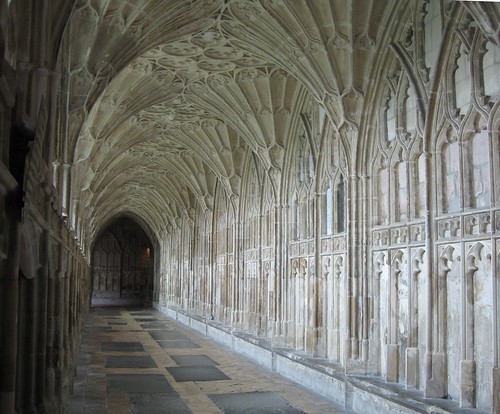
Gloucester Cathedral Cloister at it most serene. Trips into Gloucester were pretty rare, unless you were one of the fortunate few who had access to a car. Buses into Cheltenham from the end of Greenway Lane were the usual choice on Thursdays. Cavendish House, The Sandwich Box, the Beer Tent, the Cinema, Pittville Park